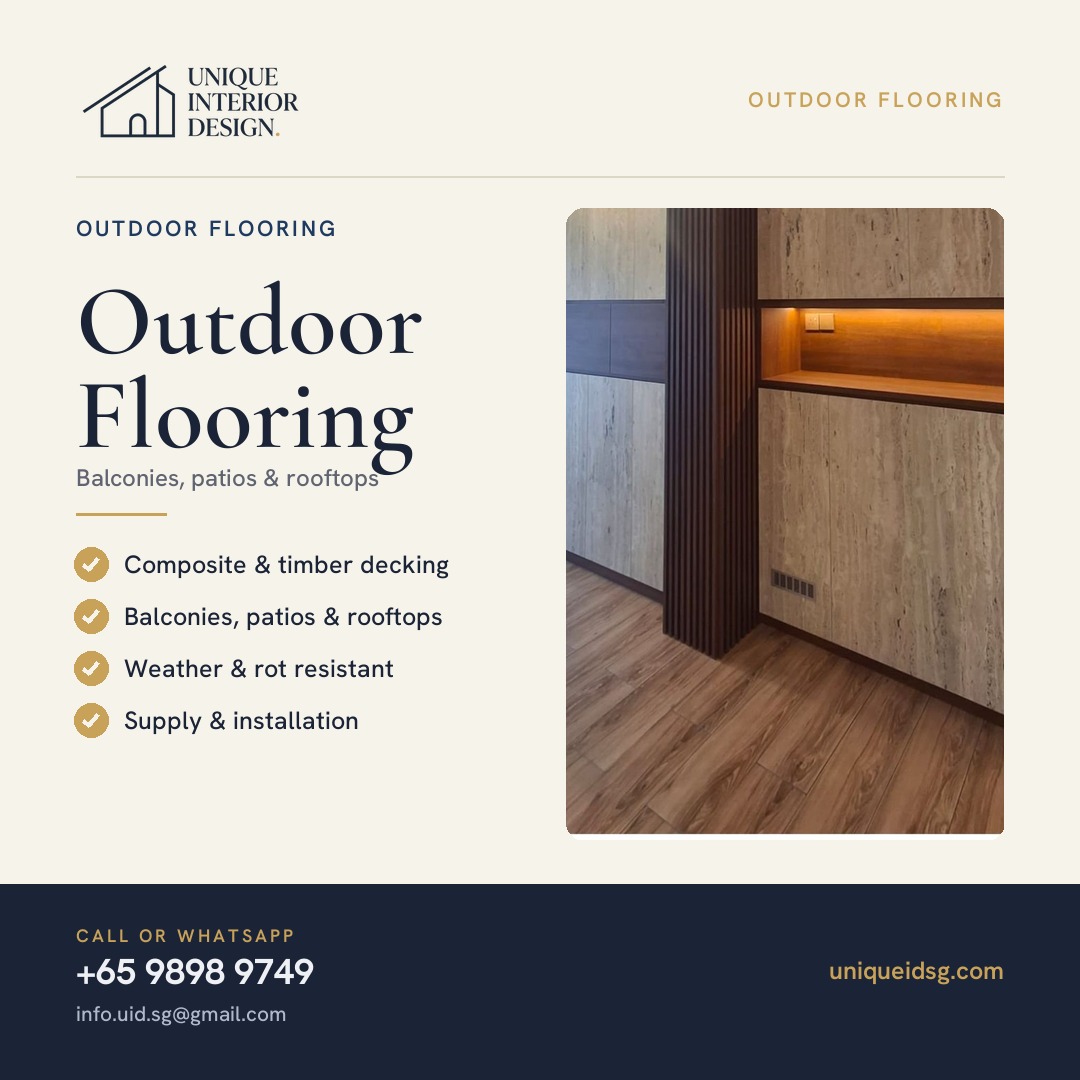
Outdoor Flooring Singapore
Outdoor flooring plays a vital role in defining the aesthetics, functionality, and safety of exterior spaces in Singapore. From residential patios and balconies to commercial terraces and recreational areas, the choice of outdoor flooring determines the overall look, durability, and maintenance requirements of the space.
With Singapore’s humid tropical climate and frequent rainfall, selecting the right outdoor flooring materials is crucial. Property owners must consider factors such as slip resistance, weather durability, ease of maintenance, and design appeal. This article explores outdoor flooring solutions in Singapore, including material options, trends, installation considerations, and tips for selecting the ideal flooring for your outdoor areas.
Why Outdoor Flooring Is Important
1. Aesthetic Enhancement
Outdoor flooring sets the tone for patios, gardens, pool areas, and terraces. It complements landscaping, furniture, and overall design, enhancing the visual appeal of a property.
2. Safety and Functionality
Proper flooring materials prevent slips and falls, especially in wet conditions. Textured surfaces, non-slip finishes, and durable materials ensure safe movement while maintaining functionality.
3. Durability in Tropical Climates
Singapore’s outdoor spaces are exposed to high humidity, heat, and rainfall. Outdoor flooring must withstand these elements without warping, fading, or deteriorating prematurely.
4. Ease of Maintenance
Well-chosen flooring reduces cleaning and maintenance efforts. High-quality outdoor flooring materials resist stains, water damage, and mould growth.
5. Property Value Enhancement
Professional outdoor flooring solutions increase the attractiveness and value of homes, commercial properties, and recreational spaces.
Common Outdoor Flooring Materials in Singapore
Singapore’s outdoor flooring market offers diverse options to suit different aesthetics, budgets, and functional requirements.
1. Timber Decking
Natural wood decking adds warmth and sophistication to outdoor areas. Popular choices include:
- Teak: Durable, weather-resistant, and naturally insect-resistant
- Merbau: Hard and resilient, suitable for tropical climates
- Ipe: High density, low maintenance, and long-lasting
Advantages:
- Classic natural look
- Comfortable underfoot
- Compatible with garden and pool areas
Considerations:
- Requires periodic sealing and maintenance
- Susceptible to moisture damage if untreated
2. Composite Wood Decking
Composite wood decking combines natural wood fibres with recycled plastics to create durable, low-maintenance flooring.
Advantages:
- Resistant to water, rot, and termites
- Low-maintenance compared to natural timber
- Available in multiple colours and textures
Considerations:
- Slightly higher upfront cost than timber
- Less natural wood feel than real timber
3. Outdoor Tiles
Porcelain, ceramic, or stone tiles are commonly used for outdoor patios, balconies, and terraces.
Advantages:
- Wide variety of textures, colours, and finishes
- Slip-resistant options for safety
- Easy to clean and maintain
Considerations:
- Proper subfloor and waterproofing required
- High-quality tiles are recommended for durability
4. Concrete Flooring
Concrete is ideal for modern, industrial, and minimalistic outdoor spaces. It can be finished with stamping, polishing, or colouring techniques.
Advantages:
- Extremely durable and weather-resistant
- Low-maintenance and long-lasting
- Customisable in patterns and colours
Considerations:
- Can be hard underfoot
- Requires professional installation to prevent cracks
5. Rubber or Synthetic Flooring
Synthetic rubber flooring is commonly used for playgrounds, gyms, and recreational areas.
Advantages:
- Shock-absorbent and slip-resistant
- Weather and UV-resistant
- Easy to install and replace
Considerations:
- Limited aesthetic appeal for residential patios
- May fade over prolonged sun exposure
Key Considerations When Choosing Outdoor Flooring
1. Safety and Slip Resistance
Choose flooring with anti-slip surfaces, particularly for poolside areas, patios, and balconies prone to water exposure.
2. Durability and Longevity
Select materials capable of withstanding Singapore’s tropical weather, including high humidity, heavy rain, and strong sunlight.
3. Maintenance Requirements
Consider how much time and effort you can invest in upkeep. Composite wood and tiles are generally easier to maintain than natural timber.
4. Design and Aesthetics
Outdoor flooring should complement landscaping, furniture, and architectural style. Neutral tones, wood finishes, or textured surfaces can enhance visual appeal.
5. Installation and Subfloor Preparation
Professional installation ensures proper drainage, structural stability, and long-lasting performance. Poor installation can lead to warping, cracking, or uneven surfaces.
Trends in Outdoor Flooring in Singapore
1. Minimalist and Contemporary Designs
Clean lines, neutral tones, and natural textures are popular for modern terraces and patios.
2. Eco-Friendly Materials
Recycled composites, sustainably sourced timber, and low-VOC coatings are gaining traction for environmentally conscious homeowners.
3. Multi-Functional Outdoor Spaces
Outdoor flooring is now integrated with garden landscaping, seating areas, and recreational zones to create versatile living spaces.
4. Slip-Resistant and Safety-Focused Surfaces
With outdoor safety a priority, textured tiles, rubber surfaces, and grooved timber decking are widely preferred.
5. Seamless Indoor-Outdoor Flow
Designers are emphasising continuity between indoor flooring and exterior terraces to create visually unified spaces.
Benefits of Professional Outdoor Flooring Installation
- Expert Material Recommendations – Contractors advise on the best materials for longevity, aesthetics, and maintenance.
- Precision Installation – Ensures level surfaces, proper drainage, and structural integrity.
- Warranty and Support – Professional services often include maintenance guidance and warranty coverage.
- Time and Cost Efficiency – Minimises costly mistakes and reduces downtime in outdoor projects.
- Enhanced Property Value – Professionally installed outdoor flooring adds appeal and increases market value.
Maintenance Tips for Outdoor Flooring
- Regular Cleaning: Sweep and wash surfaces to prevent dirt accumulation and mould growth.
- Protective Treatments: Apply sealants or coatings for timber, composite, and concrete surfaces.
- Immediate Repairs: Address cracks, loose tiles, or warped boards promptly.
- Furniture Care: Use pads under furniture to prevent scratches and damage.
- Seasonal Inspection: Check for water drainage issues, stains, or sun damage regularly.
Conclusion
Outdoor flooring is more than just a functional necessity—it defines the style, safety, and usability of your exterior spaces. Whether it’s a balcony, terrace, garden, or pool area, selecting the right materials and working with professional installers ensures a durable, aesthetically pleasing, and safe environment.
From natural timber and composite decking to tiles, concrete, and synthetic solutions, Singapore homeowners have access to a wide range of options that balance beauty, functionality, and resilience. By choosing professional outdoor flooring services, you guarantee a seamless installation, long-lasting performance, and minimal maintenance requirements.
For expert outdoor flooring solutions in Singapore, Unique Interior Design Singapore provides customised installation, high-quality materials, and professional guidance to create outdoor spaces that are safe, stylish, and durable. Transform your exterior areas into functional and visually appealing living environments with professional outdoor flooring services you can trust.
Planning a project?
Get a free, no-obligation quote from the team that does the work.
Chat on WhatsApp