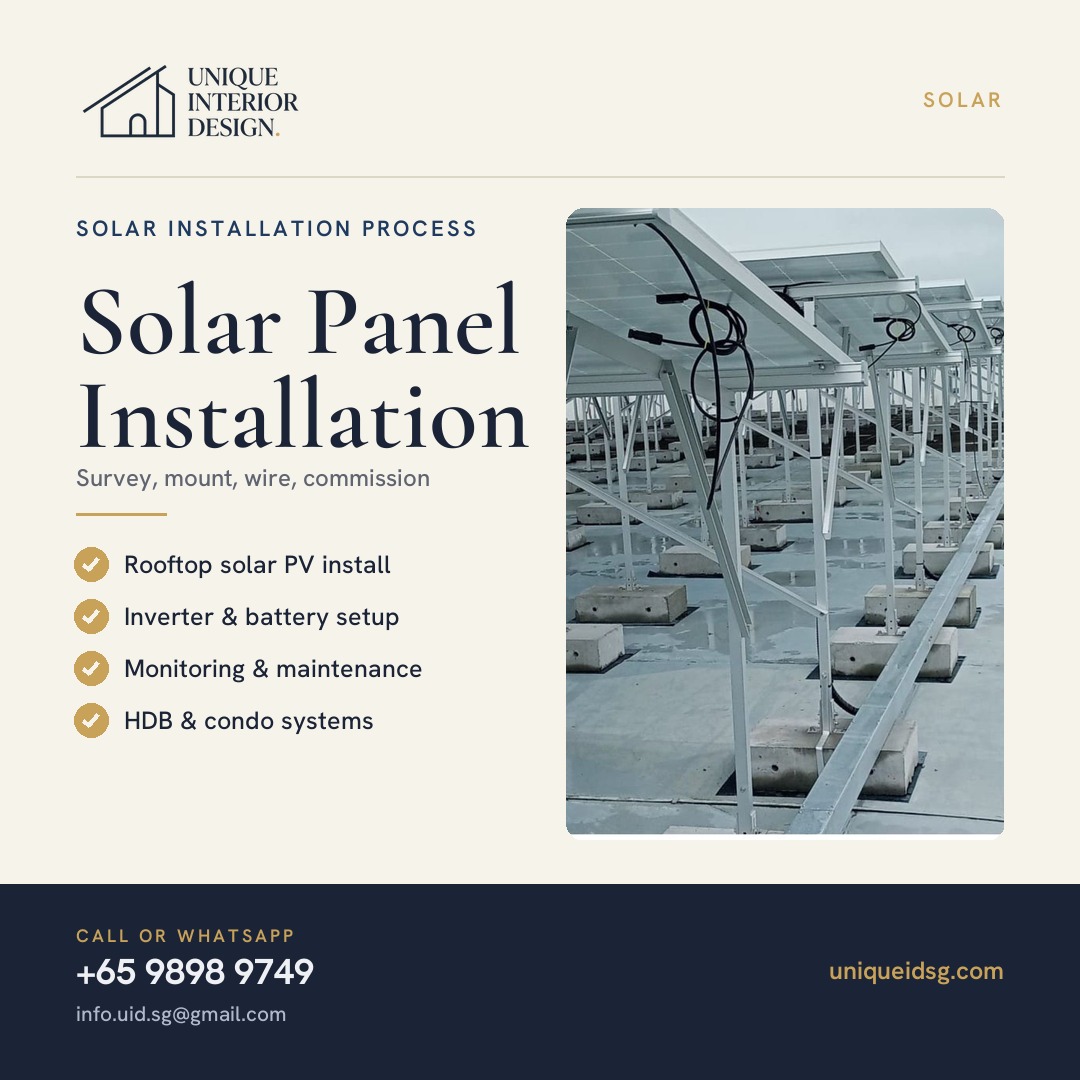
Solar Panel Installation Process in Singapore
Solar panel installation in Singapore has become a mainstream solution for homeowners and businesses seeking long-term energy savings and sustainable power generation. With strong regulatory support, advanced technology, and consistent solar exposure throughout the year, Singapore provides an ideal environment for solar energy adoption.
Understanding the solar panel installation process is essential for property owners planning to invest in renewable energy. This guide explains the solar panel installation process in Singapore, detailing each stage from feasibility assessment to system commissioning and long-term operation.
Overview of the Solar Panel Installation Process
Solar panel installation is a structured and regulated process that ensures safety, efficiency, and compliance with Singapore’s electrical and building standards. The process involves careful planning, technical assessments, regulatory approvals, professional installation, and system testing.
Each step plays a critical role in delivering a reliable and high-performing solar energy system.
Step 1: Site Assessment & Feasibility Study
The installation process begins with a detailed site assessment conducted by qualified professionals.
Key evaluation areas include:
- Roof condition and structural integrity
- Available rooftop or installation area
- Orientation and sun exposure
- Shading from nearby buildings or trees
- Existing electrical infrastructure
- Estimated energy consumption
This assessment determines whether the property is suitable for solar installation and identifies the optimal system size.
Step 2: System Design & Energy Calculation
Once feasibility is confirmed, a customised solar system design is prepared.
This includes:
- Panel layout and positioning
- System capacity calculation (kWp)
- Inverter type and placement
- Cable routing and safety systems
- Estimated annual energy generation
Professional system design ensures maximum efficiency, durability, and return on investment.
Step 3: Cost Proposal & ROI Estimation
After design approval, the contractor provides a detailed proposal outlining:
- Equipment specifications
- Installation scope
- Total project cost
- Expected electricity savings
- Payback period and long-term returns
In Singapore, most solar systems achieve full return on investment within five to seven years, depending on usage patterns.
Step 4: Regulatory Submissions & Approvals
Solar panel installations in Singapore must comply with regulatory requirements.
Approvals typically involve:
- Submission to SP Group for grid connection
- Compliance with Energy Market Authority (EMA) standards
- Structural safety verification for rooftop installations
- Electrical safety documentation
Licensed professionals handle all regulatory submissions to ensure smooth approvals and timely installation.
Step 5: Procurement of Solar Equipment
Once approvals are obtained, the contractor procures certified solar components, including:
- Solar PV panels
- Mounting systems
- Inverters
- DC and AC cables
- Safety and isolation devices
All equipment used must meet Singapore’s safety and performance standards.
Step 6: Installation of Mounting Structures
Mounting structures are installed first to securely support the solar panels.
This step involves:
- Roof surface preparation
- Installation of mounting brackets
- Waterproof sealing to prevent leaks
- Alignment for optimal panel orientation
Proper mounting ensures structural stability and long-term system performance.
Step 7: Solar Panel Installation
After mounting structures are in place, solar panels are installed and secured.
This includes:
- Panel positioning according to system design
- Mechanical fastening
- Electrical interconnection between panels
Careful handling and installation prevent damage and ensure optimal efficiency.
Step 8: Electrical Wiring & Inverter Installation
The electrical phase connects the solar panels to the inverter and the building’s electrical system.
Work includes:
- DC cable routing
- Inverter installation and configuration
- AC connection to the main distribution board
- Earthing and surge protection
All electrical works must be carried out by licensed electrical workers to ensure safety and compliance.
Step 9: System Testing & Commissioning
Before activation, the system undergoes comprehensive testing.
Testing procedures include:
- Voltage and current checks
- Inverter functionality testing
- Safety system verification
- Grid synchronisation checks
Successful testing confirms that the system operates safely and efficiently.
Step 10: Grid Connection & Activation
Once testing is completed, the system is connected to the power grid.
This allows:
- On-site consumption of solar energy
- Export of excess electricity to the grid
- Reduction of utility bills
Grid connection is finalised only after regulatory approval.
Step 11: Monitoring System Setup
Modern solar systems include monitoring solutions that allow real-time performance tracking.
Monitoring provides:
- Daily and monthly energy generation data
- System performance alerts
- Early detection of faults
This ensures long-term efficiency and operational reliability.
Step 12: Handover, Documentation & Maintenance Guidance
The final step includes a professional handover with:
- System documentation
- Warranty information
- Operation manuals
- Maintenance guidelines
Property owners receive clear instructions on system operation and basic maintenance requirements.
Maintenance After Installation
Solar panel systems require minimal maintenance but benefit from periodic checks.
Recommended practices include:
- Regular panel cleaning
- Annual electrical inspections
- Monitoring performance data
- Prompt attention to any faults
Proper maintenance ensures consistent energy output over the system’s lifespan.
Typical Timeline for Solar Panel Installation in Singapore
A standard installation timeline includes:
- Site assessment and design: 1–2 weeks
- Regulatory approvals: 2–4 weeks
- Installation and testing: 1–2 weeks
Total project duration typically ranges from 4 to 8 weeks, depending on project complexity.
Why Professional Installation Matters
Solar panel installation involves technical, structural, and regulatory considerations. Engaging experienced professionals ensures:
- Compliance with all regulations
- Safe and durable installation
- Accurate system design
- Optimal energy performance
- Long-term reliability
Professional installation protects both your investment and your property.
Conclusion
Understanding the solar panel installation process in Singapore helps property owners make informed decisions and plan their renewable energy investments effectively. From site assessment to system commissioning, each step plays a vital role in ensuring safety, efficiency, and regulatory compliance.
With the right planning and professional execution, solar panel installation delivers long-term energy savings, environmental benefits, and increased property value. Solar energy is a practical and sustainable solution for Singapore’s homes and businesses.
For end-to-end solar panel installation services, Unique Interior Design Singapore provides professional, compliant, and reliable solar solutions tailored to residential and commercial properties across Singapore.
Planning a project?
Get a free, no-obligation quote from the team that does the work.
Chat on WhatsApp